



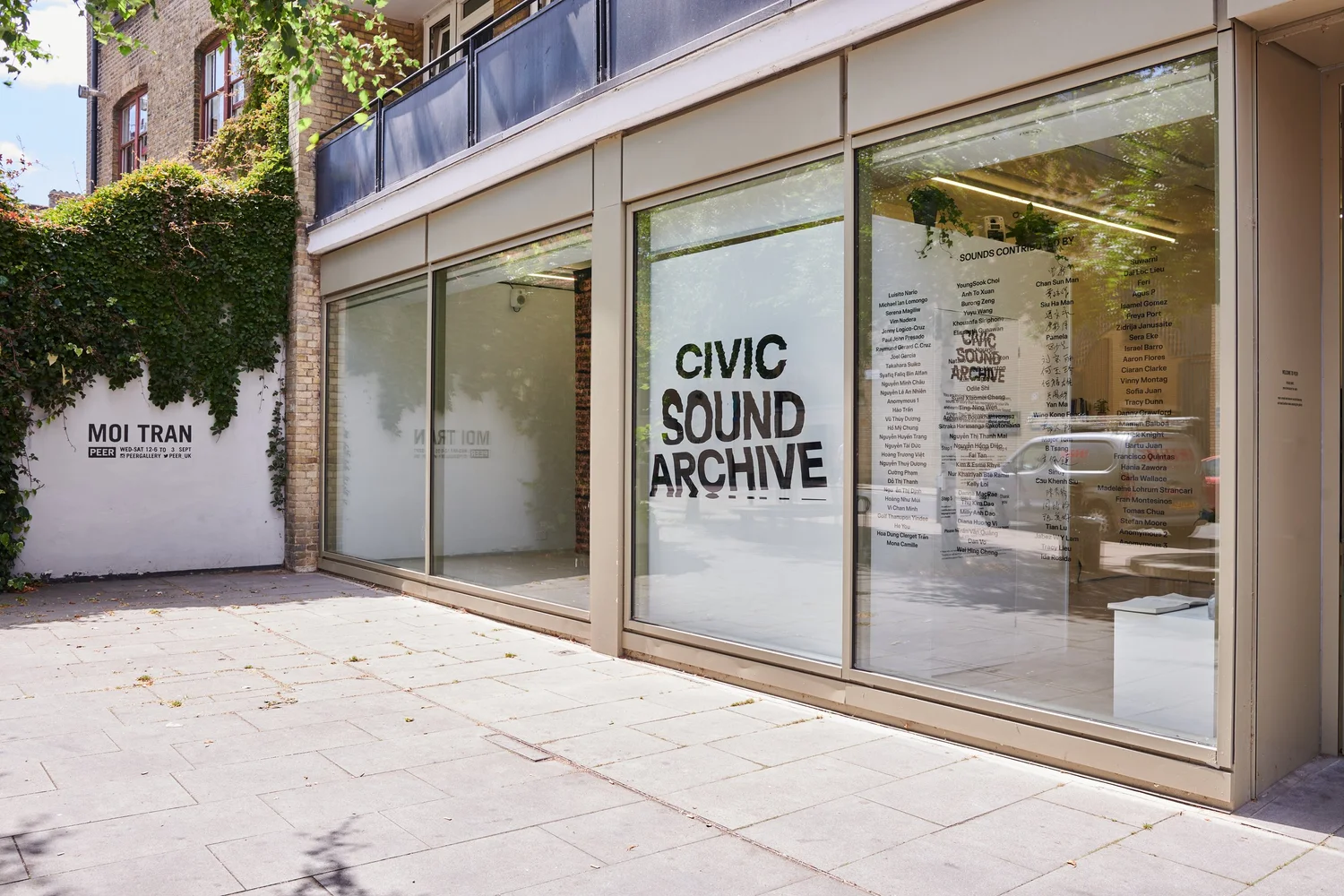
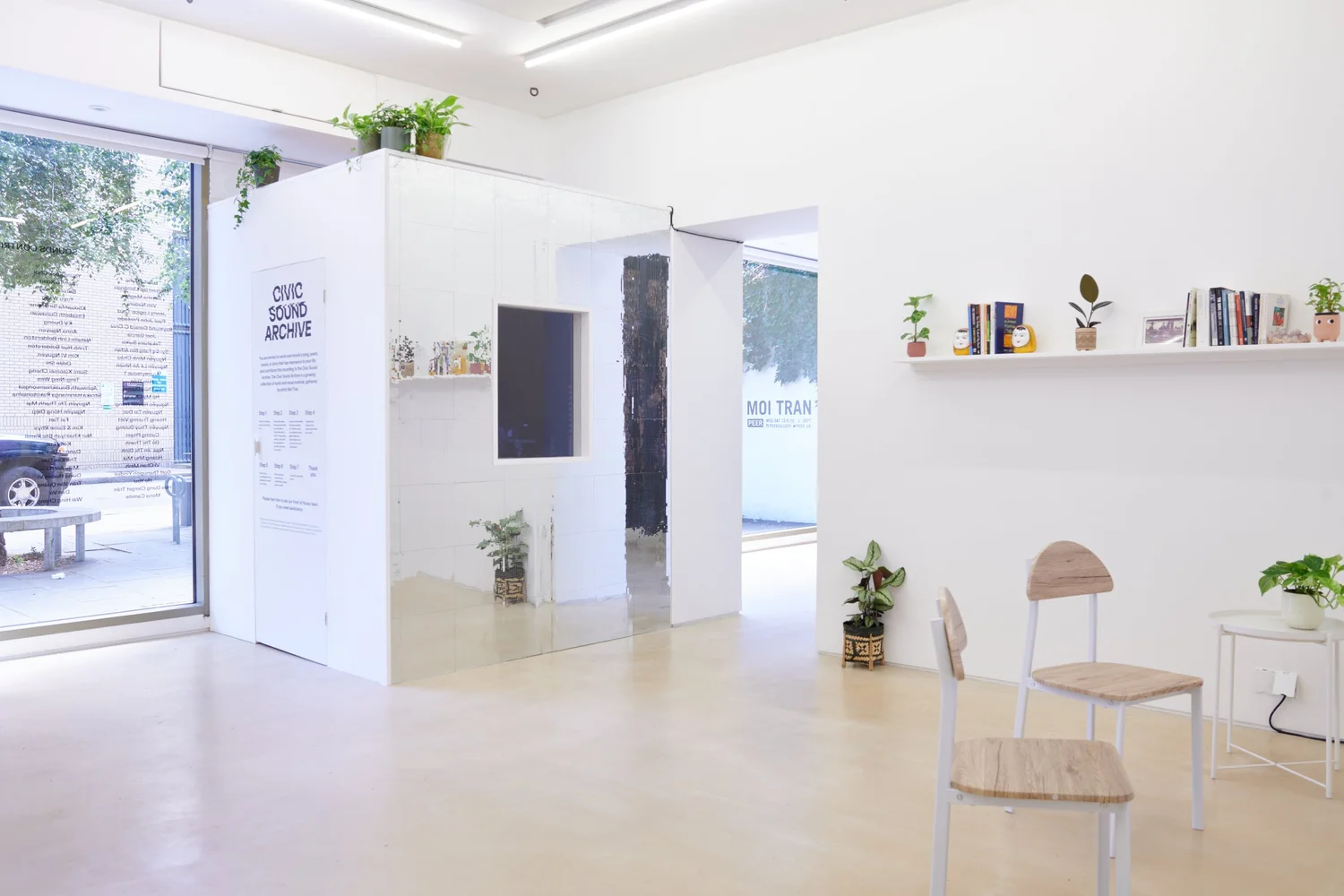

Peer was pleased to present Civic Sound Archive, the first solo exhibition in an institution by artist Moi Tran. Tran often uses sound, objects and performance as a way to intervene in civic and social spaces, and has a professional parallel practice as a set and costume designer.
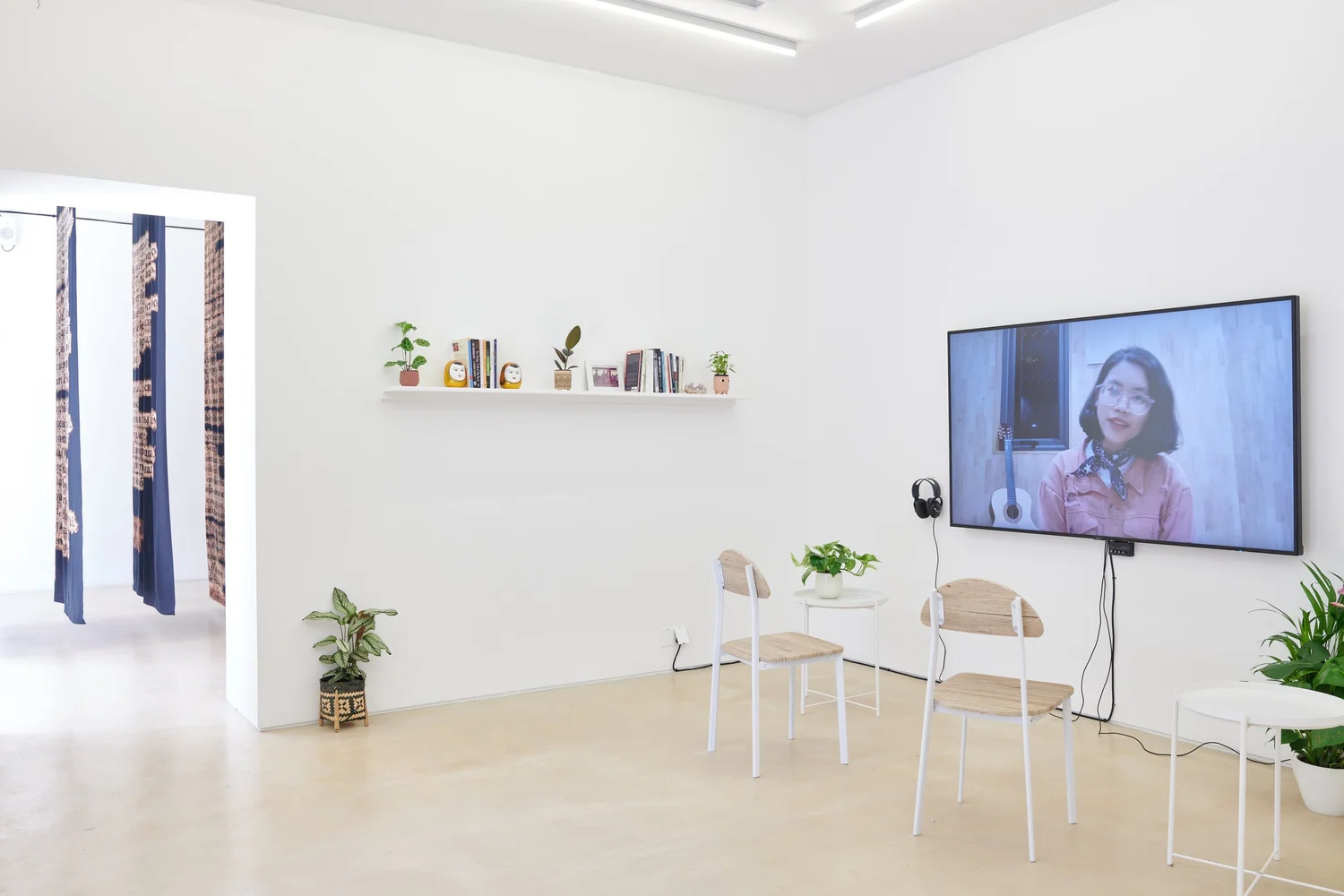
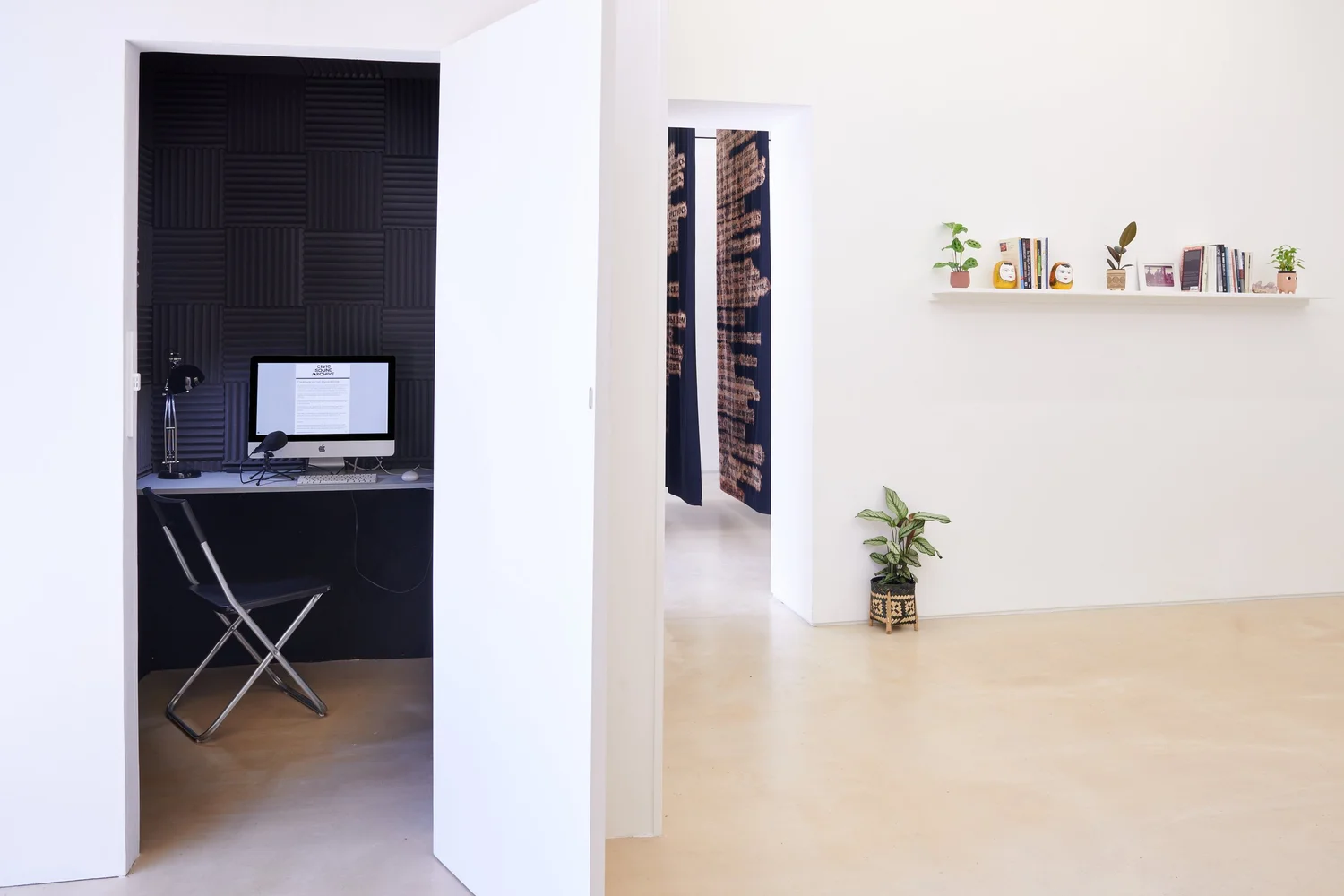
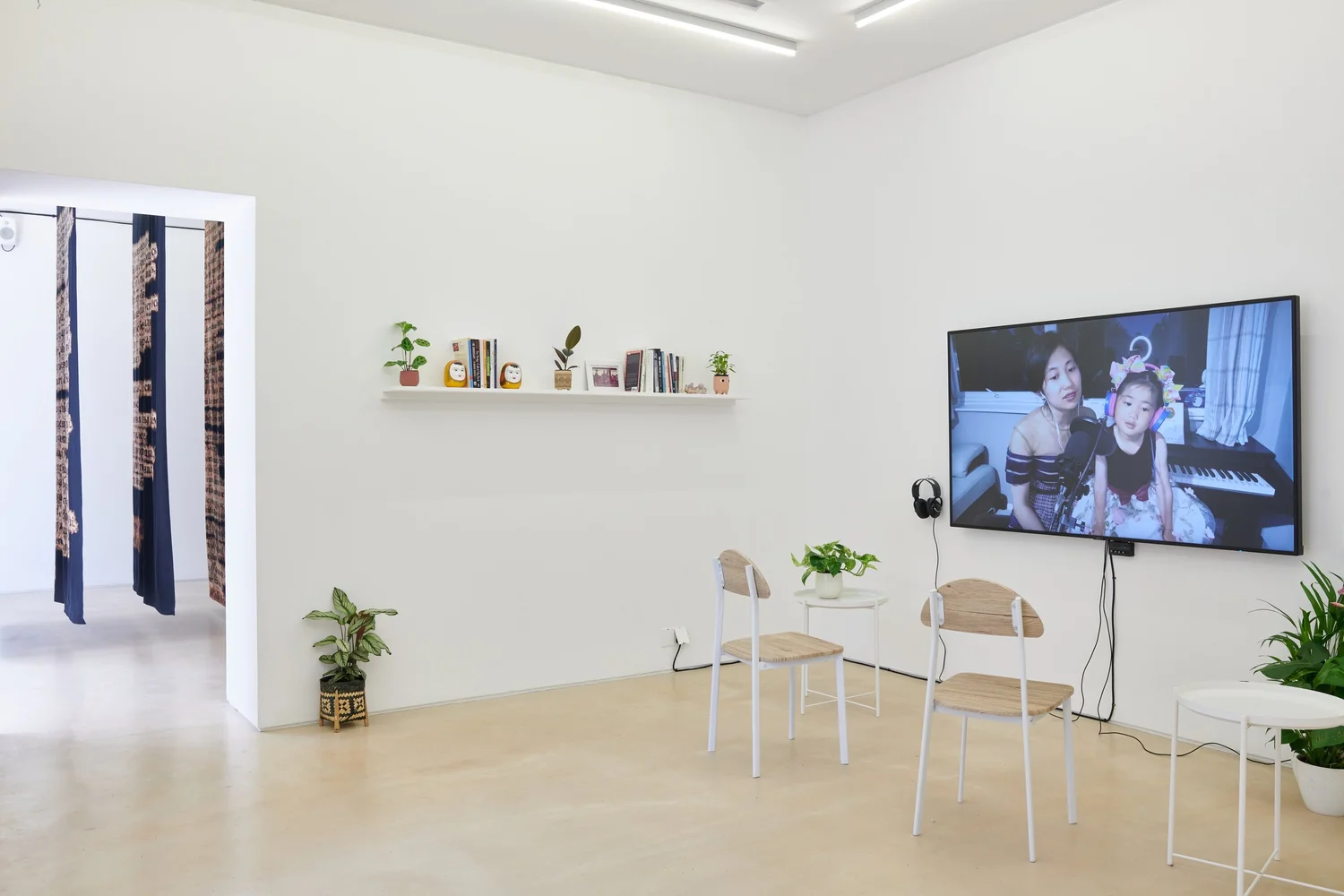
For her exhibition at Peer, Tran produced the first public presentation of an ongoing, process-driven project, Civic Sound Archive; comprising video, sound, tapestry, a recording booth, library and website.
Civic Sound Archive was an unruly, anecdotal repository for sonic expression as personal testimony, celebrating the joy of poor acoustics and fleeting sonic encounters that are often devalued within traditional archival methods. The project is an ongoing process of knowledge-making that uses sound to map personal experience and celebrates the power of archival practice in marginal spaces.
Over the past two years Tran has invited numerous individuals, predominantly from East and Southeast Asian communities, to contribute audio and visual recordings of sounds, recited songs, prayers, stories and poems in various languages and dialects. The result is a growing, open-source collection of sonic and visual material. Tran has called this process of gathering and recording audio contributions as ‘sonic witnessing’, where the invitation from Tran often leads to fleeting, transitory and non-mediated performances. This approach to recording personal expression refuses easy categorisation and provides a space for self-determined personal histories.
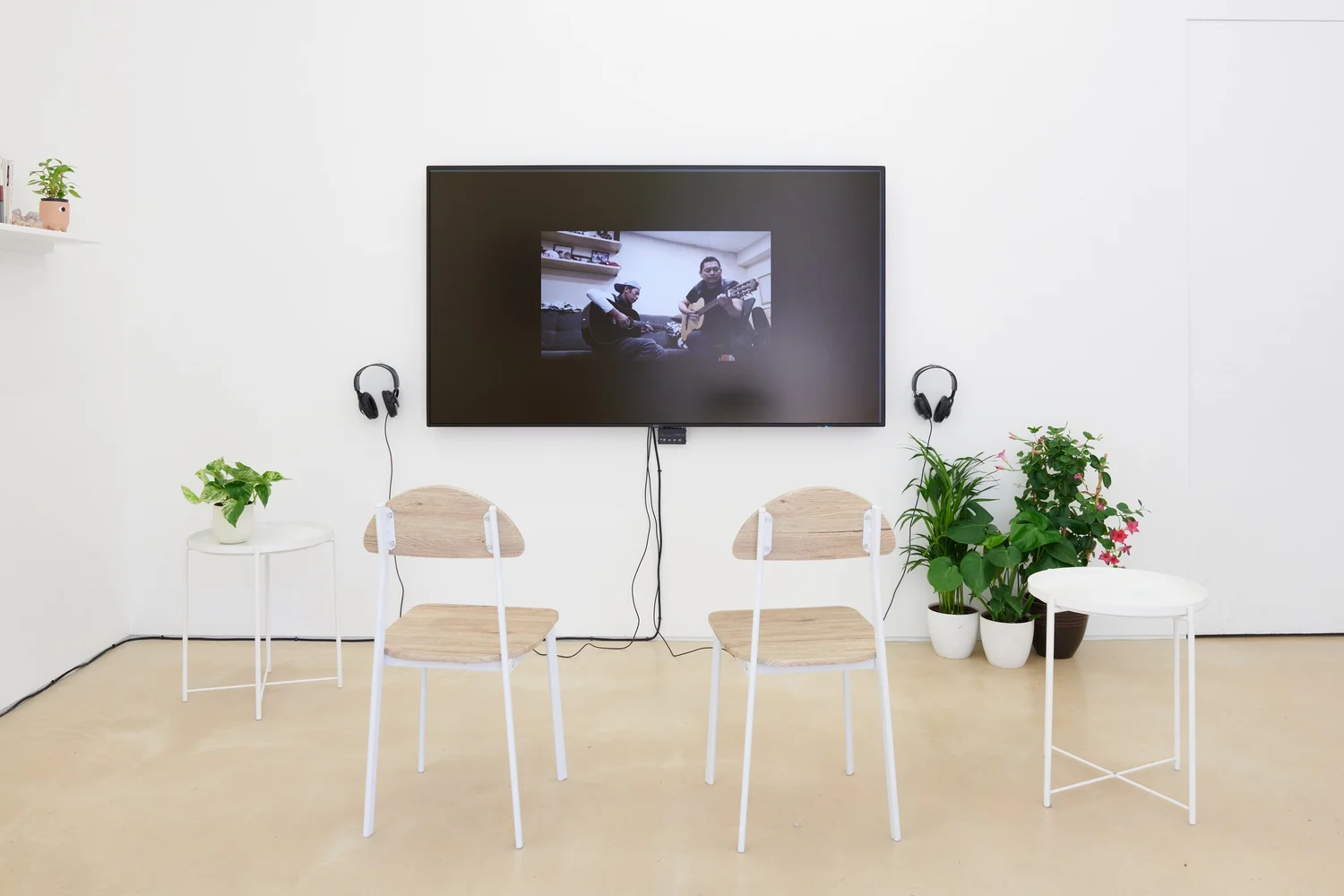
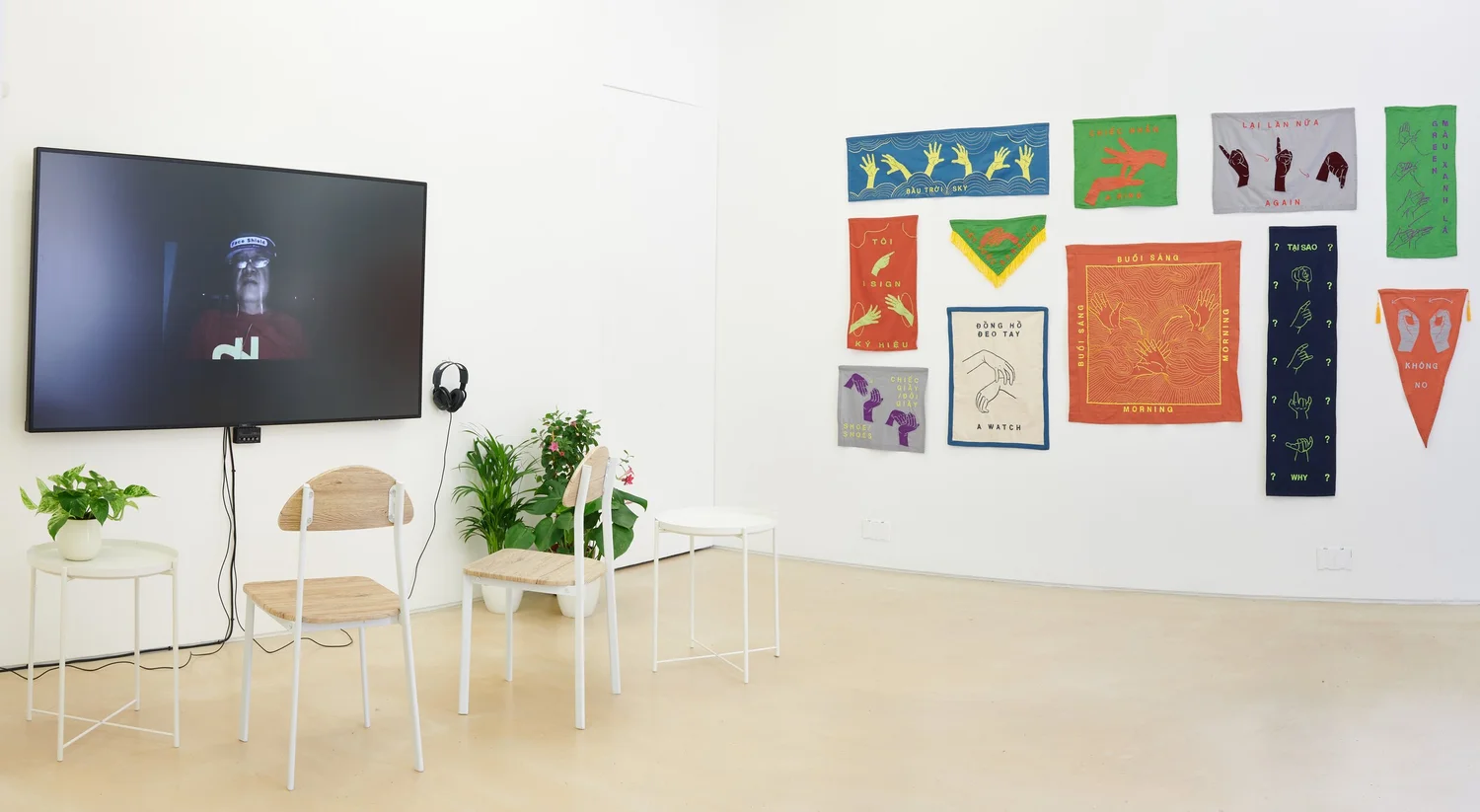
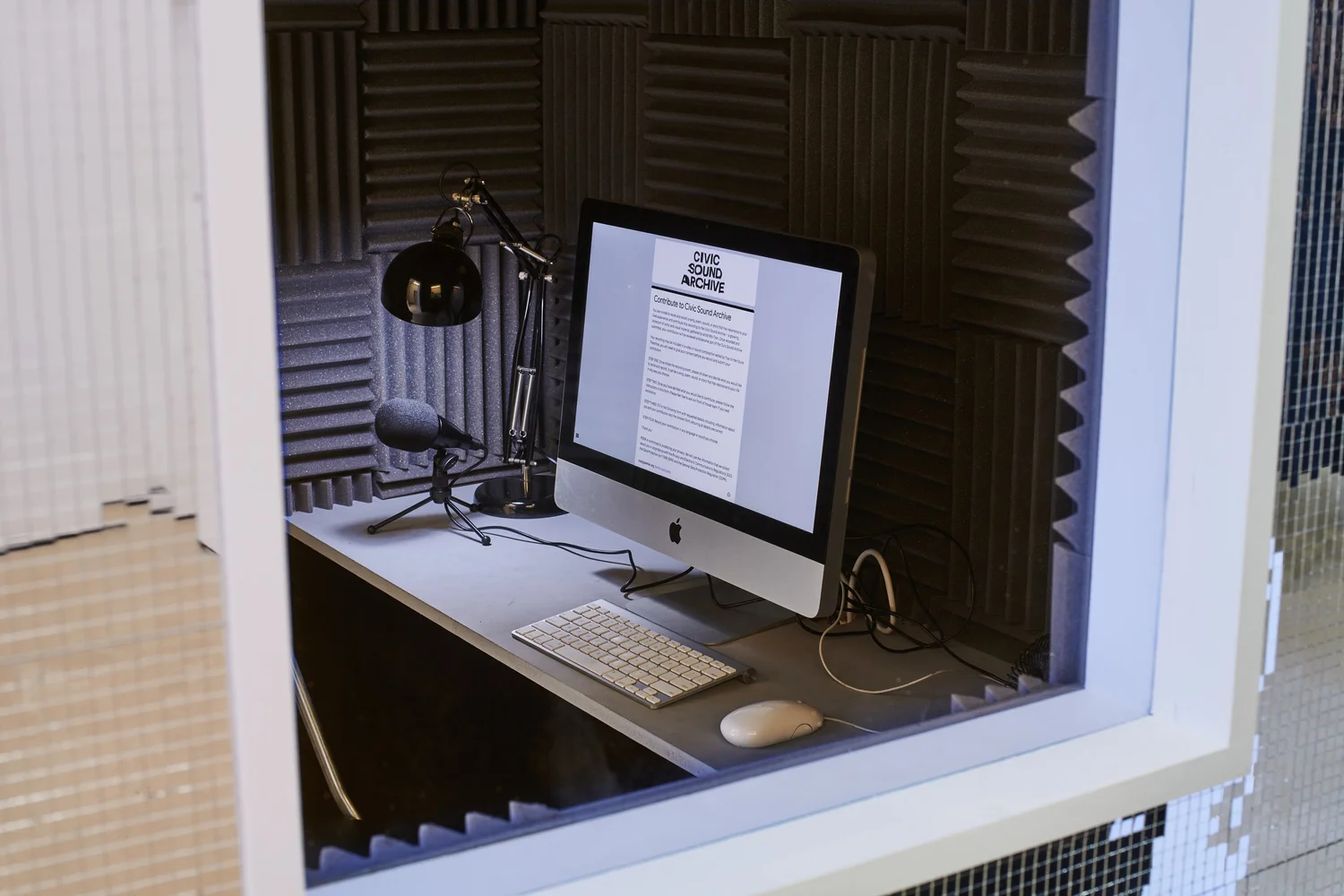
Tran’s presentation of Civic Sound Archive at Peer invited visitors to consider how sonic encounters can have the potential to be political, malleable and sculptural. As a way to continue the project, Tran produced a purpose built recording booth to encourage live contributions from visitors throughout the exhibition. A new video work by Tran recontextualised previously gathered audio-visual samples from contributors to Civic Sound Archive, while a sound work that transformed 20 group and individual contributions into new compositions played intermittently throughout the gallery space.
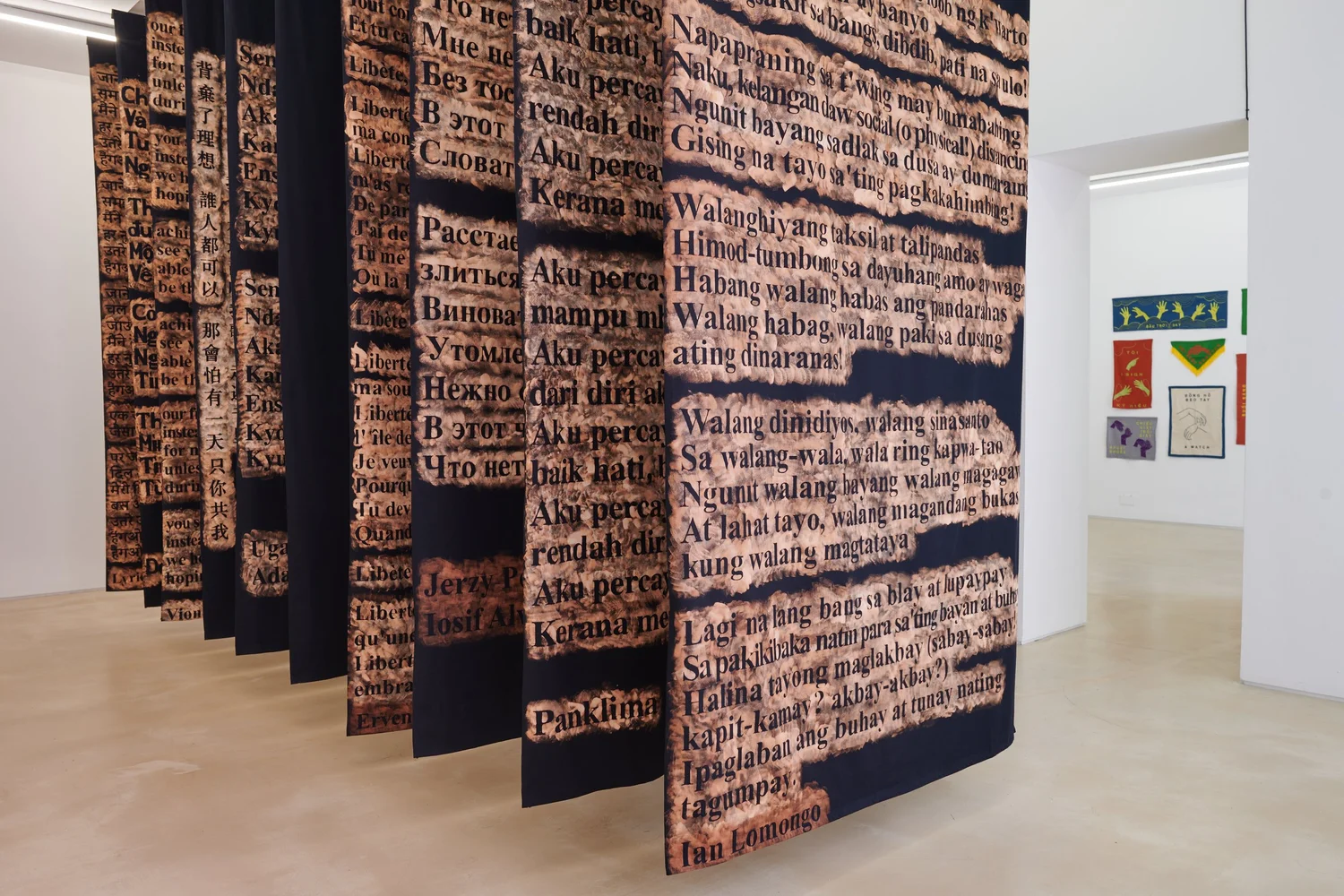
A series of hand stencilled textile banners, SHY GOD (2021), hung from the ceiling. First presented as part of a performance at SPILL festival last year, Tran re-presented these works stacked like a file of uniformed documents, non-static yet monothetic, that record lyrics, poems and words of protest.
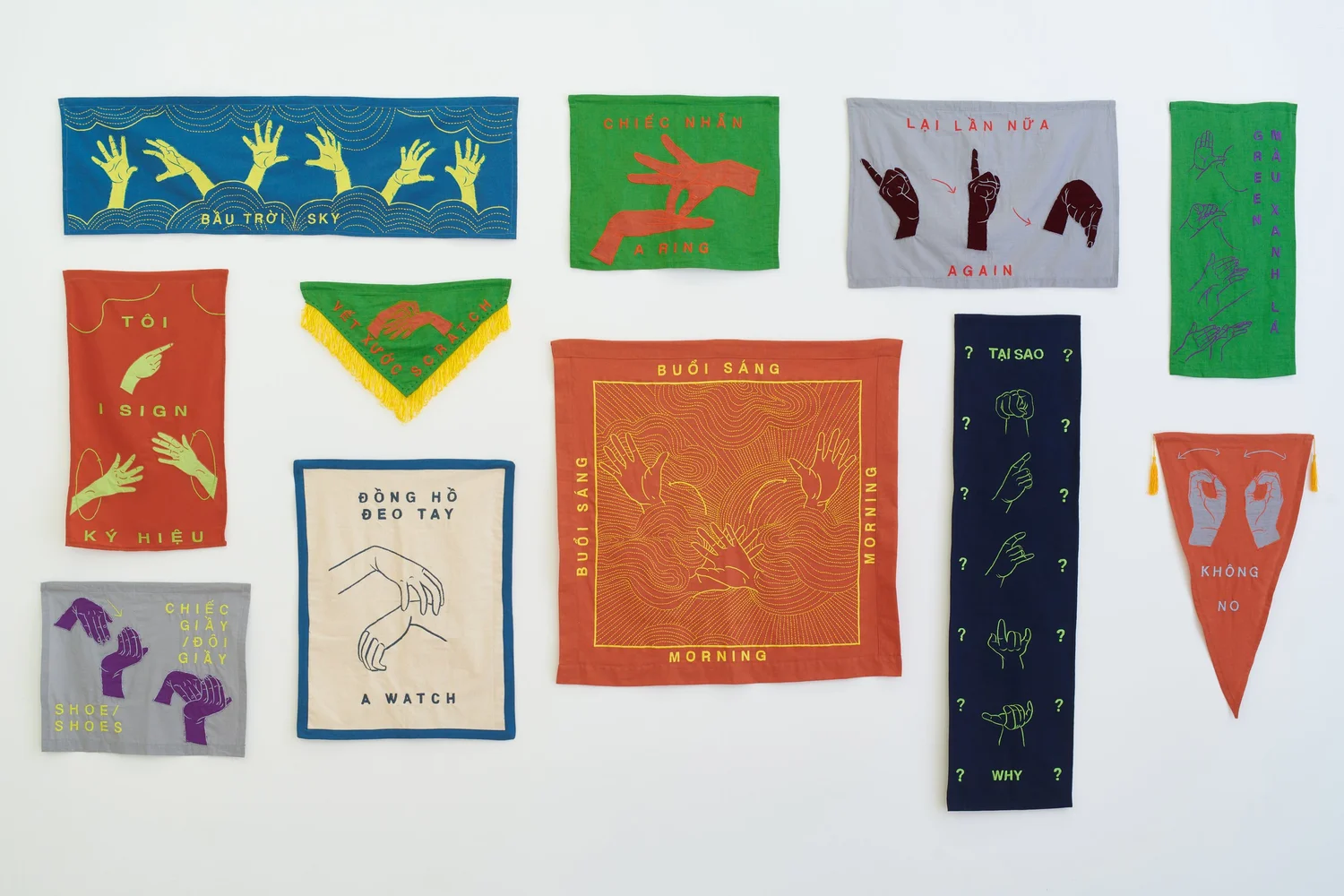
The series of tapestries, SIGN CHORUS (2022), made in collaboration with teachers and students at Central Deaf Services in Da Nang, Vietnam, lined the walls of the gallery. In these works, Tran and her collaborators reflected on alternative forms of emotional expression prioritising non-vocal forms of communication.
Tran’s presentation of Civic Sound Archive at Peer brought numerous materials together to question and disrupted conventional archive systems, and in doing so asked what and who constitutes an archive? And can we positively transform the ways we communicate by paying attention to how and what we listen to and what often goes unheard?
Civic Sound Archive identity was created by Lan Le Huong.
BIOGRAPHY
Moi Tran was born in Vietnam in 1977 and now lives and works in Hackney, London. Her practice explores the intersection between contemporary art and live performance through theatre, text, sound, installation, and video. Her recent works examine theorisations on emotional reckoning as valued knowledge in the politics of diaspora and marginalised groups. She has presented and performed her work nationally and internationally. More information at www.moitran.com and www.moitran.co.uk
SUPPORTERS
Civic Sound Archive website was produced with support from Ericka Posadas.
The Civic Sound Archive presentation at Peer was supported by The Foundation Foundation, Hello Again Hackney and National Heritage Lottery Fund. The Sign Chorus, shown as part of this presentation, was funded by The National Archives with support from University of East London.
PRESS
Hackney Citizen
Programme